
Japanese KitKats come in flavors that are hard to find elsewhere: matcha, wasabi, sake, soy sauce or edamame. Since its first special flavor in 2000, Nestlé Japan says it has released more than 400 flavors. Why Japan of all places, and what is behind all the flavors?
Since when has KitKat been sold in Japan?
KitKat came to Japan in 1973, through the confectioner Fujiya, which worked with the British company Rowntree. In 1988, Nestlé bought Rowntree. Since 1989, KitKat has been made at Nestlé's Kasumigaura factory in Ibaraki Prefecture.
The first special flavor was strawberry in 2000, initially available only on the island of Hokkaido. Since then, according to Nestlé Japan, more than 400 flavors have appeared. The trade magazine FoodNavigator reported in 2018 that 20 to 30 new flavors are added every year.
Why are there so many KitKat flavors in Japan?
There are several reasons:
- Japanese customers love new things. Nestlé Japan says so itself, and according to Nestlé Japan, convenience stores in Japan add new products every two to three weeks.
- The souvenir culture. In Japan, people bring regional specialties back from trips for colleagues and family, known as お土産 (Omiyage). Nestlé attributes the success of its many flavors to exactly this.
- The name brings luck, more on that below.
Why is KitKat considered a good-luck charm?
"Kitto Katto," as KitKat is pronounced in Japanese, sounds similar to きっと勝つ (Kitto Katsu), "you will surely win." According to Nestlé Japan, the connection comes from the dialect of the island of Kyūshū. Since 2003, Nestlé has run campaigns for students before exams, with the slogan キット、願いかなう。, roughly "your wish will surely come true."
In 2009, Nestlé went a step further: together with Japan Post, it launched "KitMail," a KitKat package on which you could write an address and message and send it with a stamp. It was sold in around 20,000 post offices. The campaign won the Media Grand Prix at the Cannes advertising festival in 2009.
What regional KitKat flavors are there?
In 2002, Nestlé released a Yubari melon flavor for Hokkaido, for which, according to Nestlé, tourists even traveled there specially. From 2008, this grew into a series of regional flavors sold mainly at train stations, airports and highway rest stops as souvenirs. A few examples:
- Wasabi for the Shizuoka and Kantō region, made with the wasabi producer Tamaruya Honten
- Uji matcha with the tea merchant Itō Kyūemon from Kyoto
- Zunda (edamame paste) and soy sauce, especially successful souvenir flavors according to Nestlé Japan
- Beni imo (purple sweet potato) for Kyūshū and Okinawa
In 2016, there was even a sake KitKat: white chocolate with sake powder and 0.8 percent alcohol, aimed mainly at tourists.
What is matcha KitKat?
Matcha is the best-known Japanese KitKat flavor. The first came out in 2004 as "Uji matcha," and by 2017, according to Nestlé, more than ten other matcha versions had followed. Together with the original, matcha is one of the top-selling flavors in Japan. Since 2019, matcha KitKat has also been made in Europe because of demand.
How successful is KitKat in Japan?
According to Nestlé, KitKat became the top-selling chocolate brand in Japan in 2012, and it was still ahead in 2022. That applies to the brand, however: as a company, the Japanese maker Meiji was far ahead of Nestlé in 2012 with a 17.9 percent market share compared with 7.3 percent, according to ConfectioneryNews.
Nestlé Japan has also changed its packaging: from 2019, multipacks were switched from plastic to paper. The paper is meant to be folded into origami, and Nestlé suggests cranes.
In January 2014, a dedicated KitKat shop even opened in Tokyo, the "KitKat Chocolatory," developed with the pastry chef Yasumasa Takagi. On opening day, according to Time Out Tokyo, 500 bars sold out in under two hours. The first shop has since closed.
Where can I get Japanese KitKats?
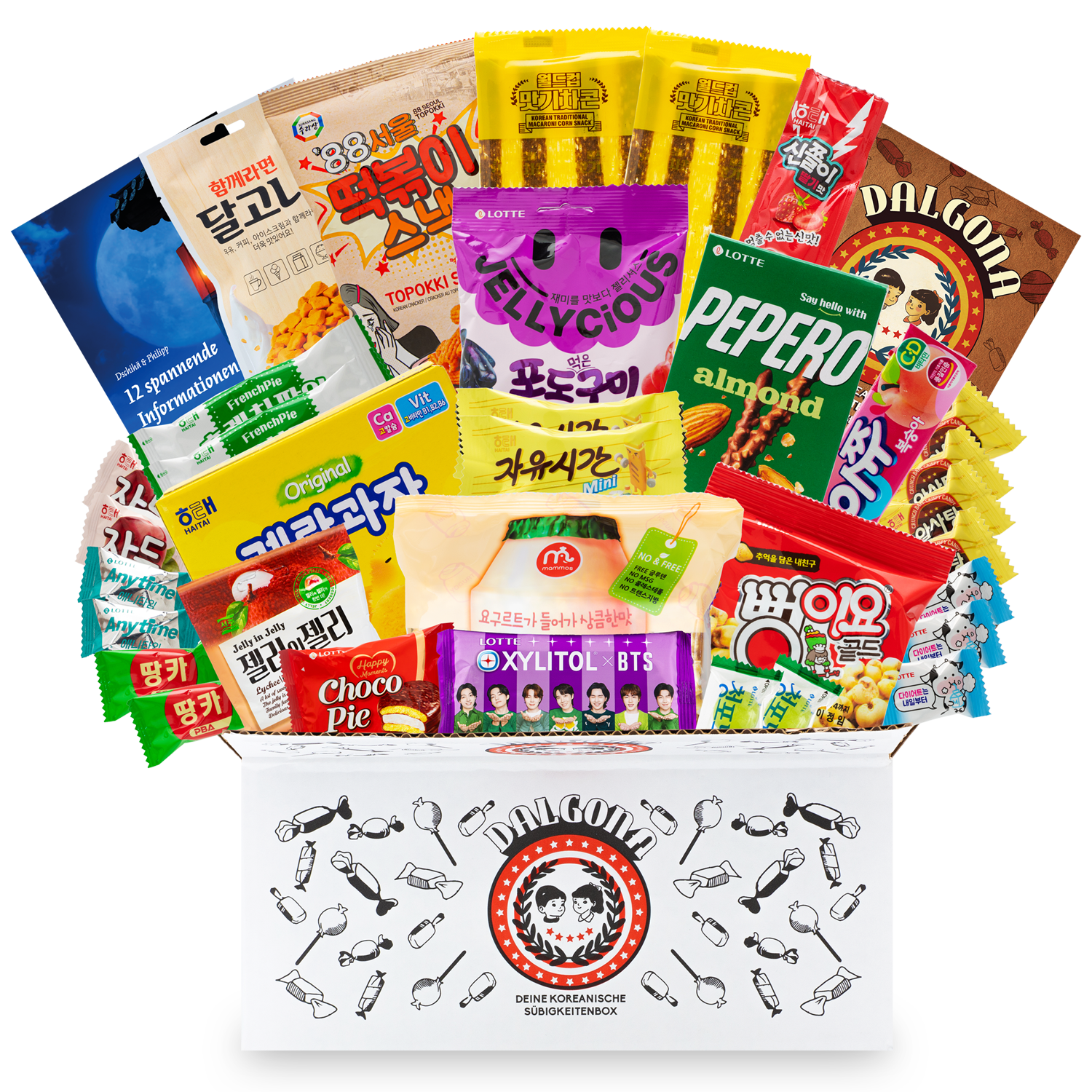
In Germany, Japanese flavors are hardly available in regular stores. We offer a large pack with nine Japanese flavors, KitKat Premium and a KitKat surprise box with 25 or 36 bars, including matcha, for example. More about Japanese sweets from dango to taiyaki can be found in our article Japanese sweets explained.
Sources
- Nestlé Japan: press releases 2023, 2018 and 2017 (in Japanese)
- Japan Post: press releases on KitMail 2008 and 2009 (in Japanese)
- Lifehacker Japan: interview with Nestlé Japan (2024, in Japanese)
- Shūkan Josei PRIME: on KitKat in Japan (2023, in Japanese)
- FoodNavigator: KitKat Japan hits 350 flavour milestone (2018) and on the paper packaging (2019)
- ConfectioneryNews: on market shares (2013) and on the sake KitKat (2016)
- Food Republic: on the many flavors (2015)
- just-food: interview on the souvenir flavors (2010)
- Time Out Tokyo: Kit Kat Chocolatory
- Wikipedia: Kit Kats in Japan, キットカット

Leave a comment
This site is protected by hCaptcha and the hCaptcha Privacy Policy and Terms of Service apply.