

Tteokbokki (떡볶이) are Korean rice cakes cooked in a spicy-sweet gochujang sauce. They cook in just under a quarter of an hour, plus the time for soaking. The rice cakes turn soft, and the sauce thickens and coats every piece. In Korea, tteokbokki is one of the typical dishes at snack bars and street stalls.
Which rice cakes do I use for tteokbokki?
The base is 가래떡 (Garae-tteok), a long, white, cylindrical rice cake made from non-glutinous rice flour. For tteokbokki, it is sold in short pieces. You will find two kinds in stores: rice cakes made from rice flour and ones made from wheat flour. The Korean Wikipedia describes the difference like this: wheat tteok makes the sauce very thick, while rice tteok stays chewy even after long cooking.
Refrigerated or frozen rice cakes are hard and should be soaked in water first, for about 20 minutes, longer for refrigerated ones. Rice cakes that are frozen solid need several hours to overnight, according to Korean Bapsang.
What ingredients do I need?
The amounts make three servings and follow the recipe from Korean Bapsang. Korean recipes vary widely here: chili powder ranges from one teaspoon to five tablespoons, soy sauce from one to six tablespoons. So it is best to adjust to taste as you go.
For the rice cakes
- 450 g rice cakes for tteokbokki
- 710 ml stock made from dried anchovies and kelp, or water (up to 950 ml for more sauce)
- 1 to 2 sheets 어묵 (Eomuk), Korean fish cake, cut into pieces
- 110 g green cabbage, cut into pieces
- 1 to 2 scallions
- 2 hard-boiled eggs (optional)
For the sauce
- 3 tbsp 고추장 (Gochujang), Korean chili paste
- 1 to 3 tsp 고춧가루 (Gochugaru), Korean chili powder
- 1 tbsp soy sauce
- 2 tbsp sugar
- 1 tbsp syrup (corn syrup in the original)
- 1 tbsp minced garlic
For a vegan version, use water or vegetable stock instead of the anchovy stock and leave out the fish cake or replace it with fried tofu pockets (Yubu).
How do I cook tteokbokki?
- Soak the rice cakes in water as described above.
- Stir the gochujang, gochugaru, soy sauce, sugar, syrup and garlic into a smooth sauce.
- Bring the stock to a boil in a wide pan or shallow pot and stir in the sauce.
- Add the drained rice cakes and let everything boil for 8 to 10 minutes. Stir every now and then so nothing sticks to the bottom. The rice cakes should become very soft and the sauce should visibly thicken.
- Add the fish cake, cabbage and scallions and cook for another 4 to 6 minutes. Add the eggs at the end.
If the sauce is too thin, let it reduce for a few more minutes. If it is too thick, add a splash of stock or water.
What else can I add?
Tteokbokki works with many ingredients. The Korea Tourism Organization lists eggs, glass noodles, fish cakes and instant noodles, and more recently squid, shrimp and cheese. With ramyeon, the dish is called 라볶이 (Rabokki), from 라면 (Ramyeon) and 떡볶이. Where Korean instant noodles come from is the subject of The success story of Korean instant ramen.
A version with much more liquid is called 국물떡볶이 (Gungmul-Tteokbokki), tteokbokki with broth.
Why is it sometimes tteokbokki and sometimes topokki?
Tteokbokki is the official spelling under the Revised Romanization of Korean; the double tt and kk stand for tense sounds. Other spellings in use include ddeokbokki and topokki. In 2010, the South Korean government chose topokki for menus because it is easier to pronounce, even though the romanization rules produce tteokbokki. Many packages say topokki as well, for example our Topokki Carbonara.
Where does tteokbokki come from?
The dish was not spicy at all originally. At the royal court of the Joseon period, there was 궁중떡볶이 (Gungjung-Tteokbokki): rice cakes stir-fried with beef, sesame oil and soy sauce. An often-cited early written record is the cookbook 시의전서 (Siŭijŏnsŏ) from the late 19th century. The Korean Food Promotion Institute names even older mentions of the name. According to a popular story, the court version was invented to bring back the king's appetite, but there is no evidence for that.
The red version with gochujang is considered the invention of 마복림 (Ma Bok-rim), who is said to have opened a tteokbokki stall in Seoul's Sindang-dong neighborhood in 1953. The year, however, comes mainly from her own account. In a 2026 opinion piece in the Korea JoongAng Daily, Moon Jung-hoon wrote that hardly anyone remembers eating red tteokbokki in the 1950s. He places the breakthrough in the late 1960s, when it appeared outside schools across the country almost at the same time.
Tteokbokki becoming a cheap everyday food has to do with wheat: According to the Korean Food Promotion Institute, flour donations from the United States in the 1950s and a government campaign for mixed grains in the late 1960s played a role. Wheat rice cakes were cheaper and easier to produce in large quantities.
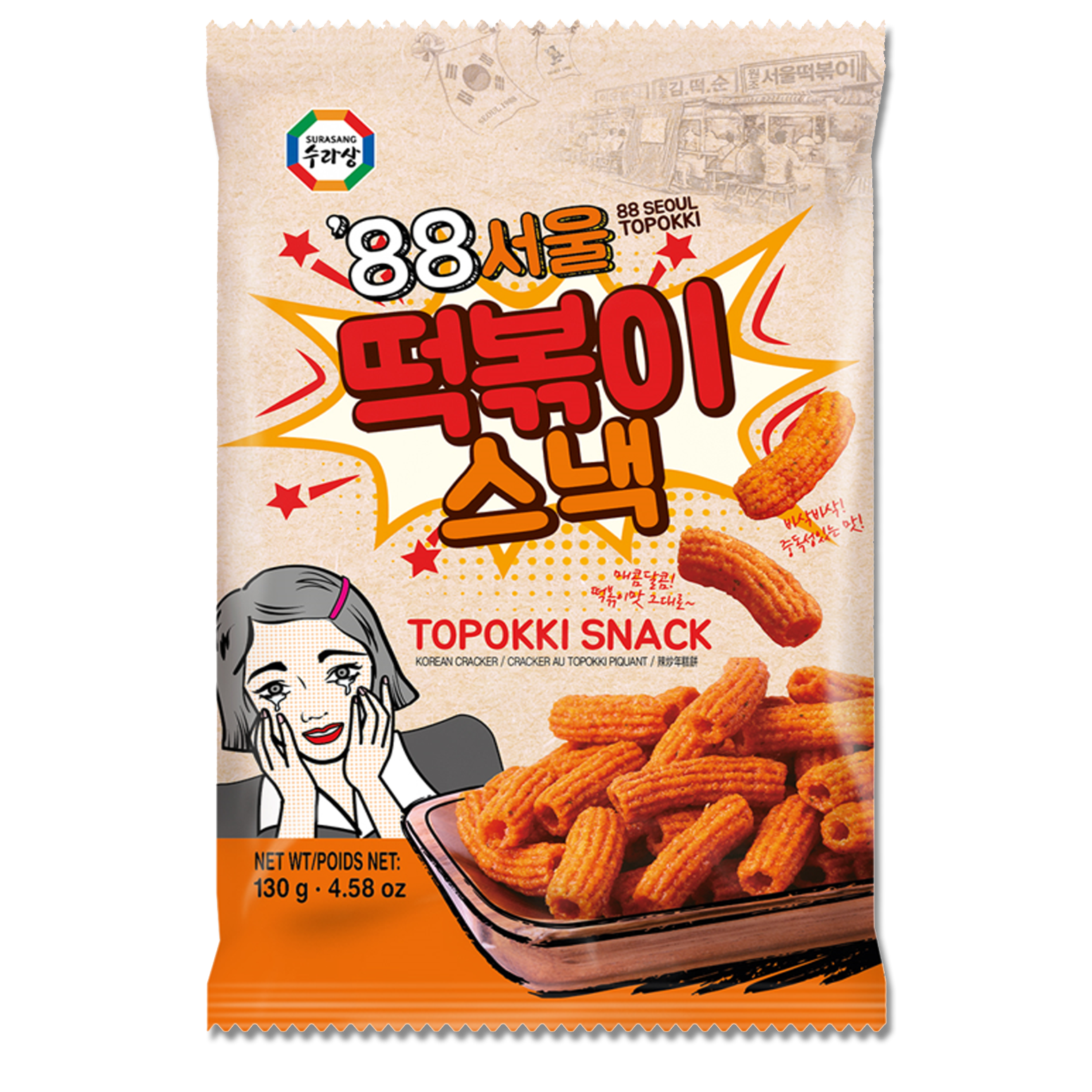
Sindang-dong still has a tteokbokki alley today. According to the Korea Tourism Organization, it began in the late 1970s and became famous in the 1980s, when every restaurant had its own DJ booth. You can find more about our tteokbokki products on our tteokbokki page, and why Koreans love spicy food in the first place is explained in Why do Koreans eat such spicy food?
How do I store and reheat tteokbokki?
Tteokbokki tastes best fresh. Leftovers quickly get dry and hard in the microwave. Korean Bapsang recommends reheating them covered in a pot with a little water or stock over medium to low heat.
Store uncooked rice cakes airtight in the fridge. Store-bought ones keep for one to two weeks there, according to Tasting Table, and up to three months or longer frozen. If they turn hard or crumbly, the quality has declined. Rice cakes harden in the cold anyway because the starch changes. Soaking and cooking make them soft again.
Sources
- Korean Bapsang: Tteokbokki recipe
- Seonkyoung Longest: Tteokbokki
- 10000recipe: recipe 7064727 and recipe 6831293 (in Korean)
- Korea Tourism Organization: Sindang-dong Tteokbokki Town
- Korean Food Promotion Institute: Tteok, an Age-old Korean Delicacy (2023)
- Korea JoongAng Daily: How spicy red tteokbokki became a national street food (2026) and Korea orders up an extra serving of English (2010)
- Korea Times: Tteokbokki in Sindang-dong retains appeal (2016)
- Korea Herald: article on gungjung tteokbokki (2014)
- Tasting Table: Beitrag zum Lagern and Einfrieren von Reiskuchen (2024)
- Wikipedia: Tteokbokki, 떡볶이, Garae-tteok



Leave a comment
This site is protected by hCaptcha and the hCaptcha Privacy Policy and Terms of Service apply.