

Bingsu (빙수) is Korea's best-known ice dessert: finely shaved ice, usually milk-based, with sweet toppings such as sweetened red beans, rice cakes, condensed milk or fruit. The name literally means "ice water" (氷水). Here you will find out which kinds there are, where bingsu comes from and how to make it at home without an ice machine.
What is patbingsu?
The classic is 팥빙수 (Patbingsu), bingsu with 팥 (Pat), sweetened red beans. It often comes with condensed milk, fruit syrup, fruit and small rice cakes (떡, Tteok). According to Korean Bapsang, many popular patbingsu shops in Korea keep it simple and use only red beans and tteok.
What is the difference between bingsu made with ice and with milk?
Bingsu used to be made from shaved water ice. Today, milk ice is common: frozen milk is shaved so finely that it looks almost like snow. It was popularized by the chain 설빙 (Sulbing), which opened its first store in Busan in April 2013. Sulbing used milk instead of water ice and roasted soybean powder instead of red beans. According to the Asia Business Daily, its injeolmi bingsu had sold more than 25 million servings by 2019.
인절미 (Injeolmi) is a rice cake made from steamed glutinous rice and coated in 콩가루 (Konggaru), ground roasted soybeans. Both go on top of injeolmi bingsu.
What kinds of bingsu are there?
Besides red bean and injeolmi bingsu, the English Wikipedia lists melon, coffee and green tea as popular kinds. Bingsu with mango, melon or watermelon is also common.
The mango bingsu at Seoul's luxury hotels is particularly famous. Prices have risen sharply: according to the Asia Business Daily, the Four Seasons Seoul charged 149,000 won in 2025 and the Shilla hotel 110,000 won. In 2019, the Shilla's mango bingsu had cost 54,000 won. At coffee chains, on the other hand, bingsu in a cup is available for 4,400 to 6,300 won, according to the Korea Times.
Where does bingsu come from?
For a long time, ice was a luxury in Korea. In the Joseon period, it was stored in stone ice houses, the 석빙고 (Seokbinggo). Seven of them survive in South Korea, built between 1713 and 1742. The best known is in Gyeongju: it was first built of wood in 1738, moved to its current location four years later and has been protected as a Treasure (No. 66) since 1963. At the time, ice went mainly to the court and high officials.
Whether there were already ice desserts in the Joseon period is not documented. According to the Korea JoongAng Daily, modern bingsu probably came from Japan during the Japanese colonial period; in Japan, shaved ice is known as kakigōri. The earliest Korean description dates from 1877, according to the Korea Times: after a trip to Japan, the envoy Kim Gi-su described ice shaved into powder with egg yolk and sugar. According to a report in the newspaper Dong-A Ilbo, there were already more than 400 bingsu shops in Seoul in 1921.
After the Korean War, condensed milk and syrup made bingsu more varied. Sources differ on when patbingsu took on its current form, with dates ranging from the 1920s to the 1980s.
How do I make bingsu without an ice machine?
With frozen milk, it works without a machine. The amounts make two servings and follow a recipe from WhatToCookToday.
For the milk ice
- 300 ml whole milk
- 45 g sweetened condensed milk (연유, Yeonyu)
- 40 g water
For the topping (per serving, after Korean Bapsang)
- 2 to 3 tbsp sweetened red beans
- 2 tbsp condensed milk
- small rice cakes, fruit or roasted soybean powder as you like
- Stir together the milk, condensed milk and water and pour the mixture into a freezer bag.
- Put the bag in the freezer for at least 5 hours, preferably overnight.
- Roll or bash the bag firmly with a rolling pin until the ice is finely crumbled. If you have a powerful blender, you can also crush the ice in it.
- Put the milk ice in a bowl, add the beans and the other toppings and drizzle everything with condensed milk.
Sweetened red beans and small bingsu rice cakes are available ready-made at Asian grocery stores. If you want to cook the beans yourself: Korean Bapsang first boils 454 g of dried adzuki beans in water for 5 minutes, drains them and then simmers them in fresh water over medium-low heat for about an hour. Finally, ½ tsp salt, ⅓ cup sugar and ⅓ cup honey are added, and everything simmers uncovered for another 10 minutes. The beans keep for up to a week in the fridge and several weeks in the freezer.
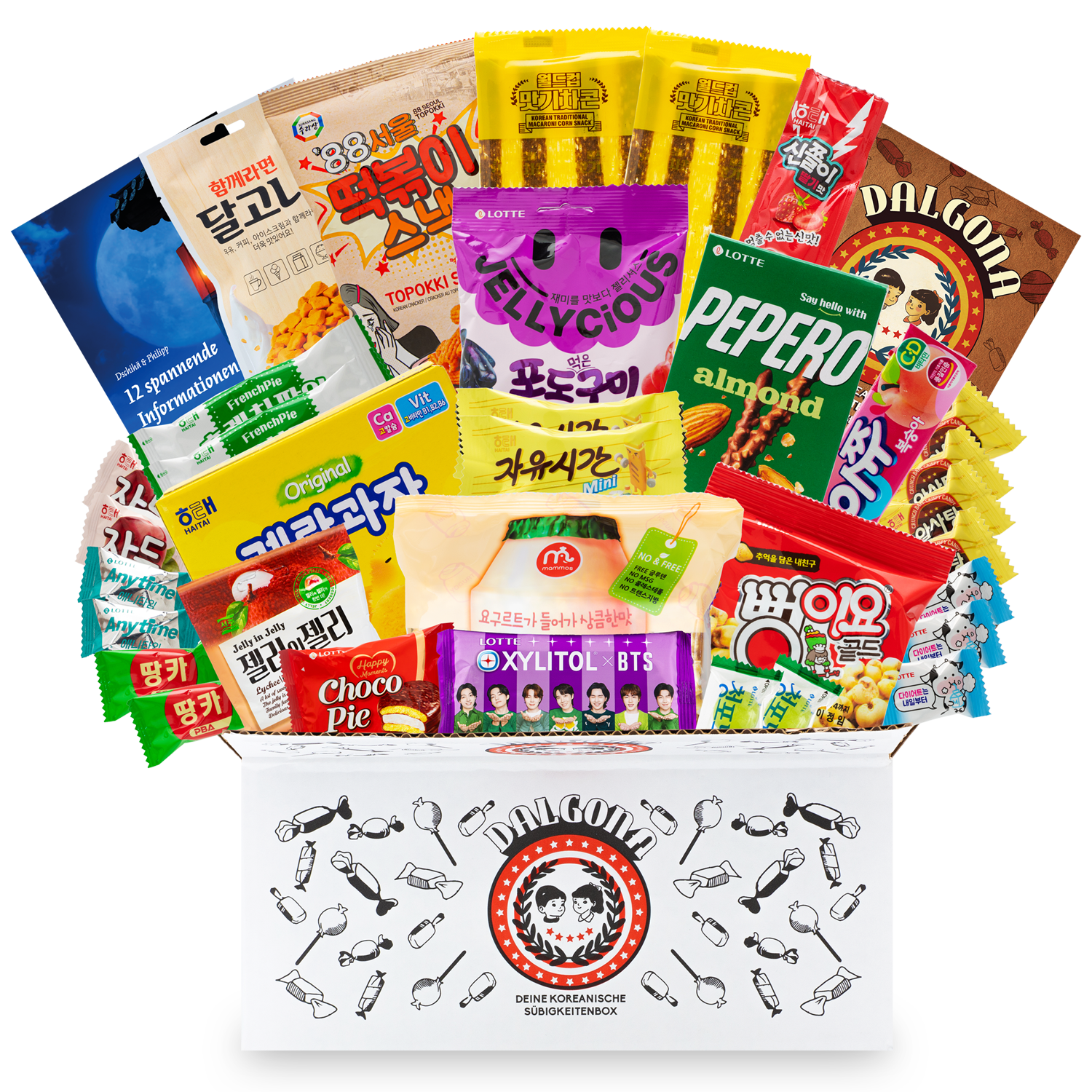
If you want to taste your way through Korean sweets, you will find snacks from Korea, Japan and Taiwan in our sweets category. Dalgona, the Korean sugar candy, even gave its name to a whole coffee trend: more about it in our article on dalgona coffee.
Sources
- Korean Bapsang: Bingsu (Shaved Ice with Sweet Red Beans) (2020)
- WhatToCookToday: Korean Injeolmi Bingsu
- 10000recipe: recipe 7005123 and recipe 6982827 (in Korean)
- The Asia Business Daily: on Sulbing (2020) and on hotel bingsu prices (2025)
- Korea Times: Bingsu: all you need to know (2025)
- Korea JoongAng Daily: Bingsu, Korea's most dynamic dessert (2019)
- KOREA Webzine (Korean Culture and Information Service): on bingsu (2024)
- Wikipedia: Bingsu, Sulbing, Gyeongju Seokbinggo, 석빙고



Leave a comment
This site is protected by hCaptcha and the hCaptcha Privacy Policy and Terms of Service apply.